Quick Summary: Best Glamping Tents of 2026
The camping industry in 2026 has evolved into a luxury movement, offering climate-controlled, 4-season glamping tents that act as comfortable, weather-resistant sanctuaries. Based on field testing for structural integrity, atmospheric regulation, and setup speed, here are the top 3 luxury tents on the market:
- RBM Outdoors Panda Large: The ultimate 4-season fortress with a rapid pop-up hub mechanism, double-layered thermal insulation, and an integrated stove jack for extreme winter weather.
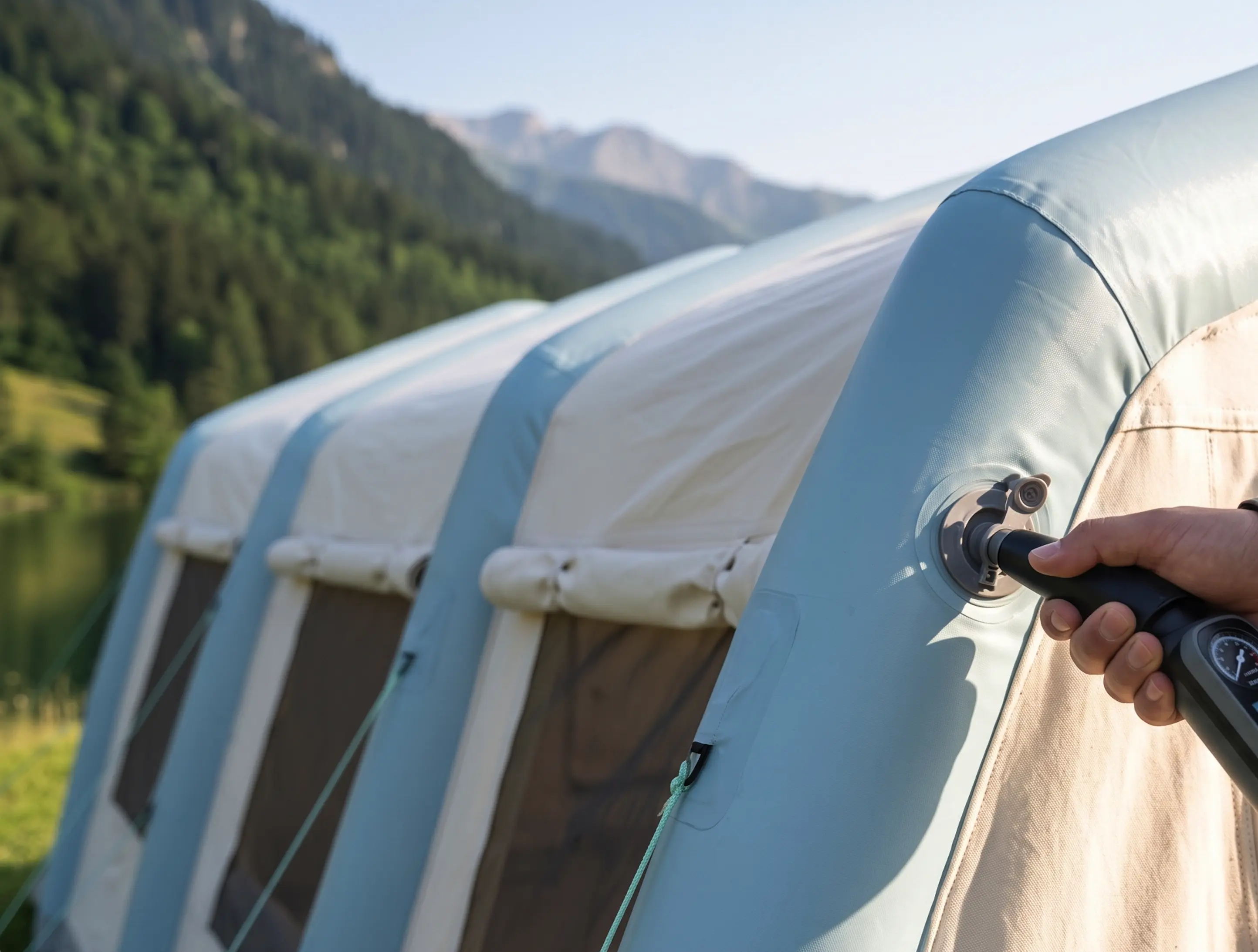
- Coody 17.2 Inflatable Tent: A premium air tent featuring high-pressure TPU air pillars instead of metal poles, offering rapid inflation and a wind-resistant flexible frame.
- Stout Pro Series Bell Tent: A classic, breathable 100% cotton canvas shelter with a high ceiling and steel center pole, ideal for semi-permanent glamping resorts or backyard retreats.
Side-by-Side Spec Comparison: Top 3 Glamping Tents
|
Feature / Specification |
1. RBM Outdoors Panda Medium |
2. Coody 10.0 PRO Inflatable Tent |
3. Nordisk Asgard 12.6 Bell Tent |
|
Primary Category / Style |
Extreme 4-Season All-Weather Hub Tent |
Premium Inflatable Heavy-Duty Air Tent |
Scandinavian Polycotton Bell Tent |
|
Frame Architecture |
Quick Pop-Up Hub Mechanism |
High-Pressure TPU Air Pillars |
Height-Adjustable Steel Center Pole |
|
Usable Interior Area |
8.33 m² (~89.66 sq ft) |
8.33 m² (~89.66 sq ft) |
12.6 m² (~135.6 sq ft) |
|
Outside Peak Height |
2.05 m (80.7 in) |
2.05 m (80.7 in) |
2.50 m (98.4 in) |
|
Floor Footprint / Diameter |
3.5 m corner-to-wall / 3.4 m corner-to-hub |
3.5 m corner-to-wall |
4.0 m circular diameter |
|
Total System Weight |
31.0 kg (68.34 lbs) |
31.0 kg (68.34 lbs) |
21.0 kg (46.3 lbs) |
|
Fabric & Floor Construction |
Double-Layer Awning + Removable Oxford Floor |
Premium Canvas Awning + Removable Oxford Floor |
Technical Technical Polycotton + Zip Floor |
|
Stove Jack Integration |
1 Built-in Jack (90 mm / 3.54 in) |
1 Built-in Jack (90 mm / 3.54 in) |
Optional Aftermarket Flashing |
|
Doors & Windows |
2 Entrances, 4 TPU Velcro Windows |
2 Entrances, 4 TPU Velcro Windows |
1 A-Frame Door, Ground Windows |
|
Included Hardware & Extras |
18 Pegs, 12 Ice Pegs, Repair Kit, Organizers |
Repair Kit, Guy Ropes, Organizers, Bag |
Steel Pegs, Guy Ropes, Carry Sack |
Why do we feel an irresistible urge to escape our urban concrete jungle, only to demand that the wilderness feel like a high-end luxury resort? This fascinates scientists and sociologists alike: we crave the pristine air and wild solitude of nature, yet we refuse to spend the night shivering on hard dirt or wrestling with leaky polyester flies. In 2026, the global outdoor industry has responded with an architectural revolution. The best camping tents of 2026 no longer represent a compromise between comfort and adventure—they are fully insulated, high-standing mobile sanctuaries engineered for absolute luxury camping.
If your memories of camping trip adventures involve bent fiberglass poles, dripping condensation, and claustrophobic sleeping quarters, it is time to rediscover what a modern glamping tent offers. Today’s top luxury camping tents combine historic fabric craftsmanship with aerospace-grade structural mechanics. From rapid pop-up hub frames and high-pressure inflatable air structures to breathable double-layered awnings and heavy duty canvas bell tent models, the options available for sale today cater to every conceivable outdoor lifestyle. Whether you are building an off-grid backyard haven, launching a commercial glamping resort business, or planning an extreme winter car camping expedition for a couple or family, today's market has elevated outdoor living to an art form.
"In every walk with nature, one receives far more than he seeks," John Muir famously wrote over a century ago. Equipping your journey with an uncompromising 4 season shelter ensures that your seek for peace is met with total warmth, security, and prestige. In this exhaustive review, we will evaluate the top tents on the market today. We will analyze structural engineering, evaluate fabric thermodynamics, and highlight essential features—such as integrated wood stove jack pipe ports, multi-door ventilation, and readily replaceable parts—so you can buy the perfect shelter with absolute confidence.
How to Choose the Best Glamping Tent to Buy in 2026 for Year-Round Comfort
Choosing the ideal glamping shelter requires a deep dive into how structural geometry impacts internal volume and livability inside the tent. Traditional conical bell tent designs rely on a single central steel pole and steep roof angles to shed rain and snow. While bell tents offer towering peak heights, their sloping perimeters significantly restrict standing room near the edges. In contrast, modern cubic dome tents, multi-hub pop-up structures, and boxy inflatable tent models incorporate steep vertical wall angles that dramatically increase usable headroom, allowing you to walk freely across the entire floor plan.
Beyond structural shape, material selection directly dictates how your shelter handles volatile seasonal shifts. A true 4 season canvas tent or double-layered polycotton awning acts as an insulating thermal blanket, trapping ambient heat during freezing winter nights while remaining cool and airy under blinding summer sun. Unlike basic backpacking tents made from thin synthetic polyester that trap human breath and create damp internal frost, heavy-duty breathable fabrics allow moisture vapor to escape continuously, preserving a dry, comfortable indoor climate.
Finally, long-term durability and maintenance should weigh heavily on your final purchase decision. Whether you intend to set up a long term semi permanent structure for a resort business or need a portable setup for weekend car camping, inspect the quality of every hardware component. Look for heavy-duty Oxford groundsheets, reinforced tension points, clear TPU windows, bug-proof mesh doors, and stainless steel stakes. Tents that include dedicated spare parts kits—equipped with replacement guyline tensioners, spare air valves, screed locks, and fabric patch adhesives—guarantee that an unexpected storm or minor wear never cuts your wilderness getaway short.
Top 3 Best Glamping Tents on the Market: The Definitive 2026 Review & Comparison
To guide your buying decision, our team of outdoor experts conducted extensive field evaluations across harsh winter environments, coastal windstorms, and humid summer heatwaves. We evaluated dozens of glamping tents, rating them on setup speed, wind shear resistance, waterproofing integrity, thermal insulation, and overall craftsmanship. Our testing revealed that while classical canvas shelters retain timeless appeal, modern dual-layer hub fortresses and high-pressure air beam designs offer unprecedented weather protection and ease of use.
The three finalist tents in this guide represent the pinnacle of modern shelter design in 2026. Each excels in a distinct category: the RBM Outdoors Panda Medium takes our top prize as the undisputed 4-season all-weather king, the Coody 10.0 PRO offers rapid air-beam luxury, and the Nordisk Asgard 12.6 delivers classic Scandinavian heritage aesthetics.
Below is a side-by-side technical specification comparison table to help you analyze how these top-rated shelters stack up in dimension, weight, frame tech, and included accessories.
1. RBM Outdoors Panda Medium (The Ultimate 4-Season All-Weather Fortress)
Claiming the prestigious number one position in our 2026 rankings, the RBM Outdoors Panda Medium is an absolute masterclass in extreme 4-season engineering. Specifically built for adventurers, couples, and small families who demand unconditional security in sub-zero blizzards as well as torrential summer downpours, this heavy-duty hexagonal pop-up shelter redefines expedition reliability. Powered by an ultra-fast hub-tensioning frame, the Panda Medium erects in minutes without requiring you to thread a single loose pole, creating a rigid, stormproof basecamp almost instantly.
The technical specifications of the RBM Panda Medium showcase its exceptional spatial efficiency and structural balance. Providing 8.33 square meters (89.66 sq ft) of usable interior floor area, it measures 3.5 meters (137.79 in) from corner to wall and 3.4 meters (133.85 in) from corner to hub. The exterior peak height rises to 2.05 meters (80.7 in), giving occupants ample standing clearance across the room. Tipping the scales at a manageable 31 kg (68.34 lbs) with a packed size of 2.0 x 0.3 x 0.3 m (6.35 cu ft), its double-layer awning construction delivers unmatched thermal insulation, trapping interior heat while the heavy-duty removable Oxford fabric floor creates an impermeable seal against damp ground.
Functionality inside the Panda Medium is executed with meticulous attention to detail. The tent offers 2 full-sized entry doors and 4 transparent TPU velcro windows, yielding beautiful natural lighting while sealing out freezing wind. Winter hot-tenting is seamless thanks to a pre-installed 90 mm (3.54 in) fire-resistant stove jack for a wood stove. RBM Outdoors packs an industry-leading hardware bundle directly in the carry bag: 18 standard ground pegs, 12 specialized ice screw pegs for frozen tundra, 4 awning support poles, 2 detachable velcro wall organizers, a canopy mesh storage shelf, and a comprehensive spare parts kit featuring Oxford patch glue, screed locks, ceiling bolts, guyline cylinders, and patch fabric. "Safety and comfort are not luxury options in the wild; they are absolute requirements," and the RBM Panda Medium delivers both in legendary fashion.
2. Coody 10.0 PRO Inflatable Tent (The Modern Luxury Air Beam Champion)
Earning a stellar second place in our review, the Coody 10.0 PRO inflatable tent represents the absolute cutting edge of air beam shelter technology. Designed for glampers who want to bypass rigid frame assembly entirely, this premium air tent utilizes thick, high-pressure TPU air pillars that inflate rapidly via a high-volume air pump. Once pressurized, the flexible air skeleton easily handles heavy wind gusts, flexing under extreme loads and instantly springing back into shape without risk of bent or broken metal poles.
Sharing an identical 8.33 square meter (89.66 sq ft) floor plan, 2.05-meter peak height, and 31 kg (68.34 lbs) weight class with our top contender, the Coody 10.0 PRO offers an airy, luxurious indoor ambiance. It features an insulating canvas outer shell paired with an inner tent, a zip-out Oxford floor, 4 clear TPU windows, and 2 generous doors that flood the space with ambient light. Winter hot-tenting is fully supported by a built-in 90 mm (3.54 in) stove jack, allowing you to run a wood stove safely during freezing night temperatures.
Where the Coody 10.0 PRO excels is its effortless, pump-and-pitch simplicity and rich accessory pack. Included in the delivery box is a dedicated repair kit with Oxford adhesive, replacement valves, guyline tension cylinders, and patch material. While its single-wall canvas frame lacks the extreme arctic double-layer thermal cavity of the RBM Panda Medium, its sleek design, rapid air setup, and superior standing room make it one of the most attractive luxury camping tents for sale today.
3. Nordisk Asgard 12.6 Bell Tent (The Scandinavian Heritage Icon)
Securing the third spot on our podium is the Nordisk Asgard 12.6, an iconic Scandinavian bell tent celebrated for its elegant aesthetic and time-tested design. Constructed around a heavy-duty adjustable steel center pole, this classic circular shelter brings a distinct sense of Nordic heritage to any campground, backyard retreat, or glamping resort installation. Crafted from a technical polycotton blend (65% polyester, 35% cotton), the Asgard 12.6 offers exceptional breathability, allowing moisture vapor to escape while maintaining dependable rain protection.
The Asgard 12.6 provides a spacious 12.6 square meter footprint with a soaring 2.50-meter (98.4 in) center peak height, creating an open, room-like environment that easily fits queen-sized mattresses and furniture. It features ground-level windows with mosquito netting that can be opened on warm days to encourage cooling airflow, alongside a wide A-frame front entrance for easy entry. At a total weight of 21 kg (46.3 lbs), it is relatively lightweight for its footprint, making it a versatile choice for extended family car camping.
However, traditional bell tent architecture comes with notable trade-offs compared to modern hub or air beam tents. The steep roof slope results in low sidewalls that limit standing headroom near the outer edges, while the central steel pole stands directly in the middle of the living space. Pitching also requires manual guyline adjustment and ground staking, taking considerably more time than pop-up or inflatable options. Nevertheless, if you value classical Scandinavian aesthetics, natural breathability, and reliable 3-season glamping comfort, the Nordisk Asgard 12.6 remains an outstanding choice.
Canvas vs Polycotton vs Synthetic: Choosing the Right Tent Material
Selecting the ideal tent fabric requires balancing weight, weatherproofing, breathability, and long-term maintenance. Traditional 100% cotton canvas operates through an organic mechanism known as "weathering." When rainwater contacts untreated canvas, the natural cotton fibers expand, filling the tiny gaps in the weave to create a watertight seal. Crucially, the fabric retains micropores that allow interior moisture vapor from human breath to vent outside, preventing damp condensation. However, pure cotton is heavy, absorbs significant water weight when wet, and must be dried completely before storage to prevent mold.
Synthetic fabrics like high-denier polyester, commonly used in budget dome tents and lightweight backpacking tents, rely on non-porous polyurethane (PU) or silicone coatings to block rain. While polyester is lightweight, quick-drying, and budget-friendly, it possesses zero natural breathability. On cold nights, warm breath hits the cold polyester walls, instantly condensing into water droplets that drip down onto sleeping gear. Synthetic materials also suffer accelerated UV degradation under continuous sunlight, making them less suitable for long term semi permanent backyard installations.
To merge the strengths of both material classes, advanced gear manufacturers utilize technical polycotton (TC canvas). By weaving strong polyester yarns together with soft organic cotton, engineers produce a hybrid fabric that offers the breathability and UV resistance of cotton alongside the tear strength, lighter weight, and rapid drying times of synthetics. When paired with heavy-duty Oxford groundsheets and rigid TPU air beams or pop-up hub skeletons, polycotton shelters represent the absolute gold standard in 4 season glamping performance.
Practical Advice for Setting Up a Glamping Basecamp in Extreme Weather
Deploying a luxury glamping basecamp in unpredictable weather demands tactical ground preparation and careful setup protocols. Site selection is the foundation of camp safety: always pitch your shelter on elevated, level ground that naturally sheds surface runoff. Avoid low depressions where rainwater or melting snow can pool beneath your floor. Before unpacking, clear the site of sharp rocks, thorny branches, or pinecones that could puncture your groundsheet. Placing a heavy-duty footprint tarp beneath your tent provides an extra thermal barrier and shields your primary Oxford floor from abrasion.
Operating a wood stove inside your tent during cold winter trips requires strict adherence to fire safety guidelines. Always ensure your stove pipe vents through a certified, heat-resistant stove jack with adequate clearance from surrounding canvas fabric. Position a fireproof mat beneath the stove body to catch stray sparks or embers, and keep a battery-powered carbon monoxide detector inside the sleeping area at all times. Keep roof vents slightly open even in freezing temperatures; continuous air circulation flushes out ambient moisture before it can freeze into frost on interior walls.
Long-term reliability relies on proactive maintenance and keeping essential repair hardware accessible. Quality glamping shelters include replaceable components like removable organizers, heavy-duty stakes, and dedicated repair kits. Before departing on an extended journey, inspect air valves, clean zipper teeth with a soft brush, and ensure your repair kit contains fresh Oxford patch adhesive, replacement guyline cylinders, and matching fabric patches. By maintaining your equipment attentively, your glamping basecamp will remain a secure, stormproof sanctuary for years to come.